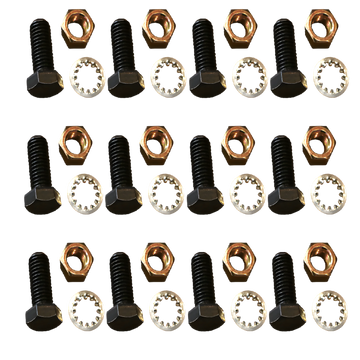
What lift pads do on a Kenco lifter
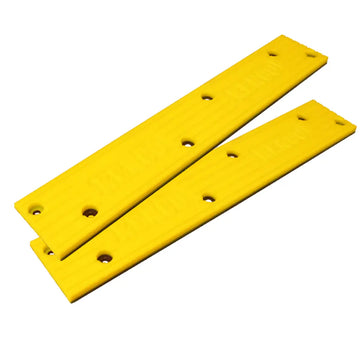
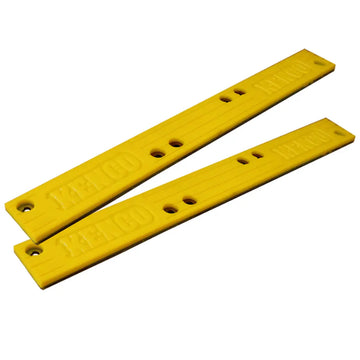
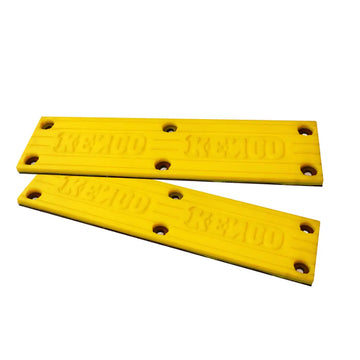
Everything a lifter is rated to hold passes through the pads. On the Kenco pad sets in this collection, the pad is an elastomer polymer blend bonded to a metal back plate: the elastomer conforms to the load face and generates friction, the back plate spreads clamping force and gives the pad bolts something solid to pull against. The KL30000 pad set uses a high-durability elastomer with reinforcement and an industrial-grade protective coating for the same reason — barrier and stone work is abrasive, and an unprotected pad face degrades quickly.
Because the pad is the consumable, replacement lift pads are a routine maintenance line item rather than a repair. Buyers who treat them otherwise end up running glazed, torn or unevenly worn pads, which reduces effective grip well before the pad looks finished. If you run a lifter daily, stocking a spare set costs less than the downtime of pulling a machine off a job to wait on parts.
Pad sizes, pad angles and pad kits in this collection
The catalog breaks into four groups. Knowing which one you need is most of the ordering decision.
| Group | What it is | Examples in this collection |
|---|
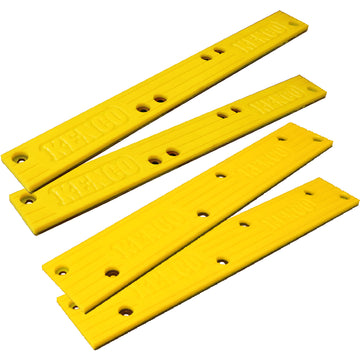
| Flat pad sets | Two replacement grip pads, elastomer polymer blend with metal back plate | 4″ × 36″ Pad Set, Two 6″ × 24″ Replacement Pads, Two 6″ × 36″ Replacement Pads, KL30000 Pad Set |
| Pad angle sets | Reinforced steel angles with a precision pivot that lets the pad conform to the load surface | KL9000V4, KL12000V4, KL12000TLP, KL16000, KL16K4T12V4 |
| Model-specific pad kits | Pad kits matched to a single lifter model | PH3500SL, PH9000SL, PH9000M Mech, PH12000, PH18000, PH30000 |
| Stone and Multilift pads | Pads and pad sets for ML-series Multilift units | ML3K, ML8K, ML12K pad sets and ML3K / ML12K stone pads |
Sizes are not universal even within one brand. The 4″ × 20″ replacement pads in this collection are listed specifically for older KL9000 units, while current KL and PH machines take other sizes. Measure the existing pad and confirm the lifter model and serial before ordering rather than assuming the size carried over between revisions.
Flat pads vs. pivoting pad angles
A flat pad set assumes the load face is parallel to the pad. That is fine on a square-cast barrier or a dressed stone block, and it is the simplest, cheapest thing to replace. A pad angle set adds a pivot: the KL12000TLP angles, for example, pivot so pad contact adapts to the angle of the load surface. On tapered concrete barrier, cast irregularities or stone with an out-of-square face, that pivot is what keeps the whole pad face loaded instead of one edge.
The trade-off is cost and parts count. Pad angles are steel assemblies with moving hardware, so they sit at the upper end of this collection's price range and need their pivots checked for wear and free movement. If your loads are consistently uniform, flat pads are the lower-maintenance choice. If they are not, pad angles usually pay for themselves in reduced pad edge wear.
Pad bolts and mounting hardware
Pad bolt sets are sold separately for 4″ × 20″, 4″ × 36″, 6″ × 24″ and 6″ × 36″ pads, and are made from high-strength alloy steel with a corrosion-resistant coating. Some listings bundle them — the 4″ × 36″ Pad Set includes two pads plus pad bolts, and the 6″ × 24″ and 6″ × 36″ replacement pad listings include bolts, nuts and washers. Others do not, so check the included-items line before checking out. As a size reference, the 6″ × 24″ pad bolt set weighs approximately 8 lb.
Reusing old fasteners is the most common mistake here. Pad bolts see repeated clamping and shock loading, and the coating that protects them on a wet or salted jobsite is easily damaged during removal. Replacing pads is also the natural moment to replace the hardware holding them. Torque to the lifter manufacturer's published figures — this collection does not publish torque values, and guessing at them is how back plates get distorted.
Inspection and the standards that apply
ASME B30.20 covers below-the-hook lifting devices, so if your lifter is suspended from a crane hook, that standard governs its marking, inspection and use — including the requirement that the device be marked with its rated load. ASME B30.20 does not license you to exceed that rating because you fitted new pads. On construction sites, OSHA 1926.251 requires rigging equipment for material handling to be inspected before use on each shift and as conditions require, and damaged or defective gear removed from service.
Practically, that means a pad check belongs in the daily walkaround: look for torn or chunked elastomer, separation from the metal back plate, glazing, uneven wear across the pad face, and loose or missing pad bolts. Uneven wear on one pad often points at something other than the pad — a bent angle, a worn pivot, or an operator consistently approaching loads off-center. Follow the lifter manufacturer's instructions for replacement intervals and rated load; this collection supplies parts, not a re-rating of your machine.
Lift pads, forklift fork pads, car lift pads and elevator pads
The phrase covers several unrelated products, and search results mix them freely. The lifting pads in this collection are Kenco replacement pads for barrier lifters, stone lifters and Multilift attachments. Forklift fork pads and forklift padding usually mean polymer covers or fork blade protectors that stop steel forks from marring finished goods — a different part with a different fitment. Car lift pads are the rubber contact pucks on an automotive two-post or scissor lift, matched to that lift's manufacturer. Elevator pads are quilted protective blankets hung inside an elevator cab and are not lifting equipment at all. If you are shopping for any of the last three, this is not the right collection.