Telehandler Attachments for Sale: What This Collection Covers
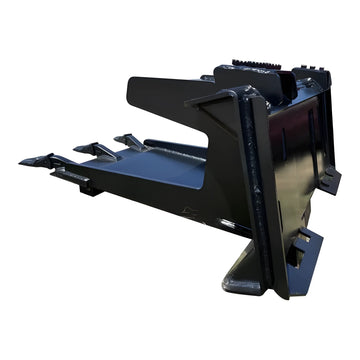
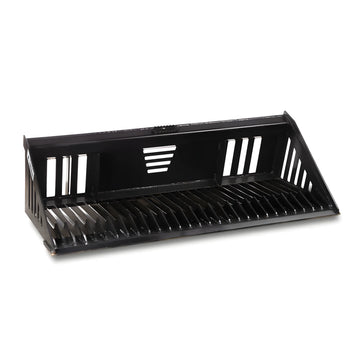
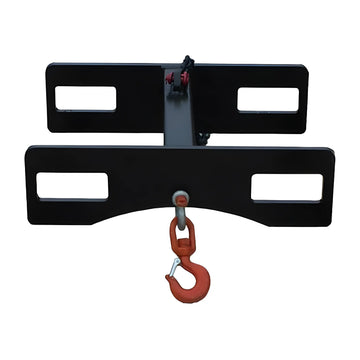
Four Star Industries attachments are listed here, from $911 to $3,960. The Heavy Duty Telehandler Bucket (model 1472) is the general-purpose unit: 72 in wide, 1.00 cu yd capacity, roughly 715 lbs, with a Quick-Tach mount, an extra-deep profile for oversized loads, and listed compatibility with standard forklift forks. The Heavy Duty Skeleton Bucket (model 150-66) runs 66 in operating width and 65.6 in inside width, holds 14.2 cu ft heaped, and has material openings up to 2-1/2 in for sifting; it weighs 555 lbs with teeth or 505 lbs with a plain blade, and is offered in 66, 72 and 84 in widths. The Slab Eater concrete slab bucket is built from high-strength T-1 steel with 3/4 in sides, a 1 in x 8 in cutting edge, and replaceable ROCK Penetrator cast teeth, on a Quick Attach mount listed as skid steer / loader compatible. The Forklift Lift Hook (model 1366) is rated 6,000 lbs, weighs 105 lbs, measures 29 in W x 9-3/4 in H x 24-1/4 in L, and slides onto fork tines.
| Attachment | Mount | Headline spec | Weight |
|---|
| Heavy Duty Telehandler Bucket (1472) | Quick-Tach; standard forklift forks | 72 in wide, 1.00 cu yd | ± 715 lbs |
| Heavy Duty Skeleton Bucket (150-66) | Bucket mount | 66 in O.D., 14.2 cu ft heaped, 2-1/2 in gaps | 555 lbs / 505 lbs |
| Slab Eater Concrete Slab Bucket (127) | Quick Attach | 1 in x 8 in cutting edge, cast teeth | Not listed |
| Forklift Lift Hook (1366) | Slides onto fork tines | 6,000 lbs rated | 105 lbs |
Choosing a Bucket for a Telehandler
The three buckets here are not interchangeable, and picking by width alone is the most common mistake. A solid general-purpose bucket like the 1472 is the right call for sand, gravel, backfill and mixed site material where you want to keep everything you scoop; its 1.00 cu yd rating and extra-deep shape suit bulk moves and loading. A skeleton bucket is for separation work — demolition cleanup, rock picking, root and debris sorting — where you want the fines to fall through and only the oversize material to stay in the bucket. The 150-66 does that through openings up to 2-1/2 in, so anything smaller passes. A slab bucket is a demolition tool, not a material-handling tool: the Slab Eater's 1 in x 8 in cutting edge and cast penetrator teeth are meant to get under and break up concrete flatwork, which is why it uses T-1 steel and 3/4 in sides rather than lighter plate.
- Bulk material, loading and backfill: solid telehandler bucket.
- Sorting, cleanup, rock and debris picking: skeleton bucket.
- Breaking and removing slab: slab bucket with replaceable teeth.
- Suspended picks: fork-mounted lift hook, not a bucket.
Fork-Mounted Lift Hooks and Suspended Loads
A lift hook converts a forklift or telehandler carriage into a single-point pick for slung loads — bundled steel, tanks, formwork, anything that rigs better than it forks. The 1366 slides over the tines with 6-3/4 in x 3 in ID fork pockets on 20 in centers and is secured with a retaining device; Star Industries lists the model line from 6,000 up to 22,000 lbs, with the 1366 itself rated at 6,000 lbs. Two regulatory points are worth raising with your safety group before this goes to work. OSHA's construction crane standard at 29 CFR 1926.1400 excludes powered industrial trucks except when they are configured to hoist and lower a suspended load by winch or hook, so a hook attachment can change which rules apply on a jobsite. ASME B30.20 covers below-the-hook lifting devices, and your employer's rigging program will normally have something to say about how the attachment is inspected and marked.
Mounting and Brand Fit: Merlo, and Everything Else
Telescopic handler attachments do not have one universal interface. Manufacturers use their own carriage patterns, and buyers searching for Merlo telehandler attachments in particular should confirm the carriage before ordering, since Merlo uses its own coupler design and may need an adapter plate to run a Quick-Tach bucket. Fork-mounted attachments are the more forgiving path: the lift hook here mounts to the tines themselves, so what matters is tine thickness and width against the 6-3/4 in x 3 in pockets and the 20 in center-to-center opening, not the carriage brand. The 1472 bucket helps here too — it lists both a Quick-Tach mount and compatibility with standard forklift forks. Measure your tines and photograph your carriage before you order; that ten-minute step prevents most returns.
Capacity, Load Charts and What Buyers Get Wrong
An attachment does two things to your machine: it adds weight, and it pushes the load center forward. A 715 lb bucket full of material is a very different pick than a 105 lb hook, and both reduce what the boom can carry at extension. Read the load chart for your machine at the boom angle and extension you actually work at, not the headline capacity on the data plate. OSHA 1910.178(a)(4) states that modifications and additions affecting capacity and safe operation may not be made without the manufacturer's prior written approval, and OSHA also requires trucks to be marked with capacity information reflecting how they are equipped — which is why the attachment weight on each product page matters as much as the capacity. ANSI/ITSDF B56.6 is the standard covering rough terrain variable reach trucks, and it is the document your machine's operating manual will generally point back to.
Inspection, Wear Parts and Operator Requirements
Buckets are consumable at the leading edge. Teeth and cutting edges wear fastest in abrasive material and on concrete; the Slab Eater uses replaceable ROCK Penetrator cast teeth for exactly that reason, and the skeleton bucket is offered with teeth or a plain blade depending on whether you are digging or scraping. Inspect welds at the mount and the bucket-to-carriage interface regularly — that is where cracks start, and a cracked mount on a boom at height is the failure nobody recovers from gracefully. Check retaining pins on fork-mounted attachments before every shift. On the operator side, OSHA 1910.178(l) requires training and evaluation for powered industrial truck operators, and that training is equipment-specific: an operator signed off on forks has not been signed off on running a loaded bucket at boom extension. Budget for the training when you budget for the attachment.