How to Choose a Full Electric Pallet Truck
Match the truck to your load weight, travel distance, and shift length. Below are the key decisions that separate a walkie from a rider and lithium from lead-acid, so you buy once for the job you actually run.
What is a full electric pallet truck?
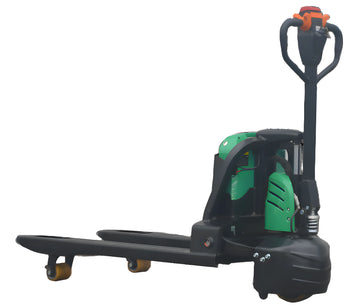
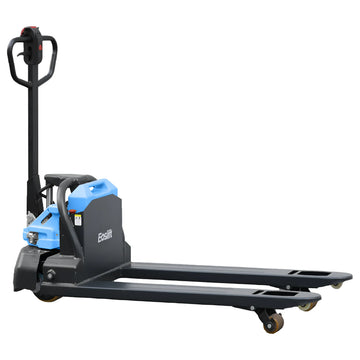
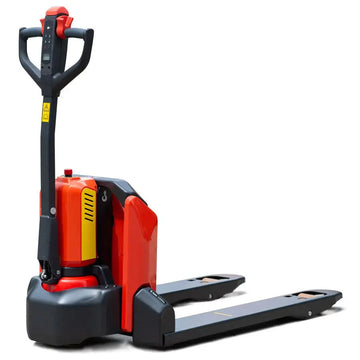
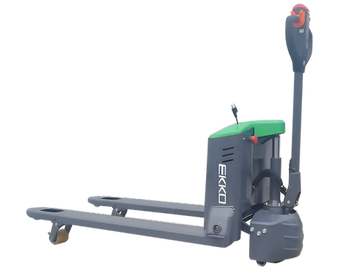
A full electric pallet truck uses a battery-powered motor for both lifting and driving, so the operator steers rather than pumps or pulls. This cuts fatigue on long runs and repetitive cycles, unlike manual jacks that require hand pumping or semi-electric units that power only the lift.
Walkie or rider — which fits my operation?
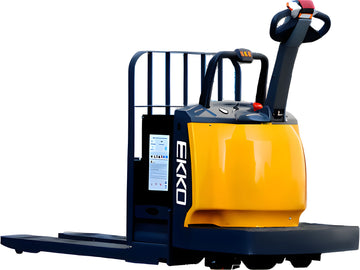
Choose a walkie for shorter hauls, tighter aisles, and lower budgets; the operator walks alongside. Choose a rider, such as the EKKO EP30A or GNT G66P-Li, when travel distances are long and cycle counts are high — standing on the platform sustains throughput across a full shift.
What capacity do I need?
Size to your heaviest expected pallet plus a margin. This collection spans 2,200 lb light-duty models up to 6,600 lb rider trucks. Common warehouse pallets fall in the 4,000–5,500 lb range, covered by models like the EKKO EP20 series and EOSLift W20.
Why choose lithium over lead-acid?
Lithium-ion batteries accept opportunity charging during breaks, eliminate watering and swap rooms, and hold voltage through the discharge. For multi-shift or high-cycle work, lithium models like the EKKO EPF and EP-Li lines reduce downtime and total maintenance compared with traditional lead-acid packs.