How to Choose a 2-Post Lift
What is a 2-post car lift?
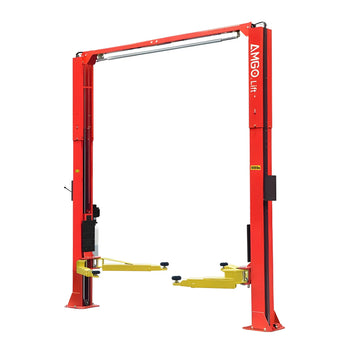
A two-post car lift is a frame-engaging lift with two columns and four swing arms that raise a vehicle by its factory lift points, leaving all four wheels hanging free. It's the standard bay lift for mechanical repair because it combines the smallest footprint in its capacity class with unobstructed access to wheels, brakes, and the undercarriage.
Baseplate vs. clear-floor (overhead) — which design do you need?
A baseplate lift runs the hydraulic and equalization lines across the floor, keeping total height low — the right pick for residential garages with standard ceilings. A clear-floor lift routes lines through an overhead crossbar, leaving the floor unobstructed for transmission jacks and rolling tools — the right pick for professional bays. Check the minimum ceiling height row in each product's spec table before ordering.
What capacity 2-post lift should you buy?
Buy for the heaviest vehicle you'll service regularly, plus margin — never at the limit. As a rule of thumb: 10,000–11,000 lb covers cars, SUVs, and half-ton trucks; 12,000 lb adds loaded 3/4-ton trucks and vans; 15,000 lb models handle HD trucks and commercial vehicles. Every listing shows rated capacity, lifting height, and drive-thru clearance in the spec table.
Symmetric vs. asymmetric arms
Symmetric lifts center the vehicle between columns — best for trucks and balanced loads. Asymmetric designs rotate the columns and stagger the arms so doors open wider — best for low cars and busy shops where techs climb in and out constantly. Several Katool models ship with multi-position arms that handle both setups.
2-Post Lift FAQs
What ceiling height do I need for a 2-post lift?
Baseplate two-post models typically install under standard 10-foot residential ceilings, while clear-floor models need roughly 12 feet for the overhead crossbar — the exact minimum is listed in each product's spec table. Measure to your lowest obstruction (beams, garage door tracks, lighting), not the drywall.
What power supply does a 2-post lift require?
Most two-post lifts in this collection run on 220V single-phase power, which is available or easily added in most US garages and shops. Confirm the voltage and phase requirement in the product spec table, and plan a dedicated circuit — sharing a circuit with compressors causes nuisance trips.
Katool vs. AMGO 2-post lifts — how do they compare?
Both are value-tier commercial brands we sell with full manufacturer warranties; the practical differences are model-by-model — capacity steps, arm design, and included adapters — rather than brand-level quality gaps. Compare the spec tables side by side, or call +1 (307) 441-5529 with your bay dimensions and vehicle mix for a direct recommendation.